
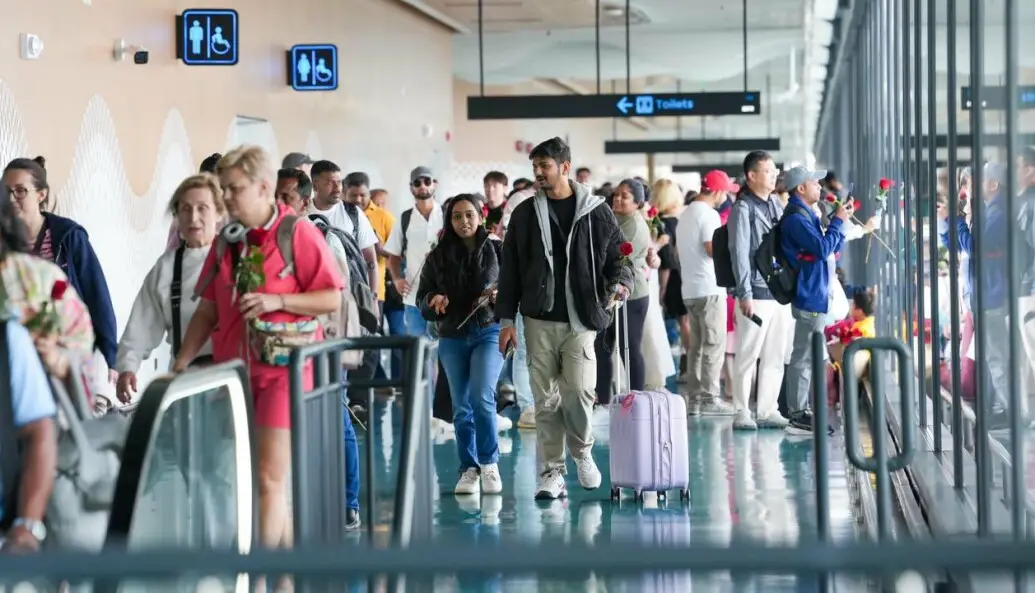
The Maldives welcomed 150,465 tourists between 1 and 22 August 2026, up 2.8 percent on the same period last year and the clearest sign yet that arrivals are turning a corner after a weak June and July. It's a genuinely encouraging month. It is not, on its own, evidence that 2026 has caught up with 2025: year-to-date arrivals through 22 August still stand at 1,405,082, a 3.8 percent decline against the same point last year. Both things are true at once, and the honest read of the data sits somewhere between "recovery" and "still catching up."
Figures from the Maldives tourism authority as reported by Maaldif on 23 August 2026. August figures cover 1-22 August only, year-to-date figures cover 1 January to 22 August 2026.
What actually turned around in August
Through August 22, an average of 6,839 tourists arrived in the Maldives each day, roughly 4,100 more people over the 22-day window than arrived in the equivalent period of 2025. The single busiest day was 8 August, with 7,879 arrivals. That's a meaningful shift after June and July, when arrivals ran behind 2025's pace and contributed to the shortfall that's still visible in the year-to-date total. August is the first month this year to post sustained growth against last year rather than add to the gap, which is the real headline here, not the raw arrivals number by itself.
We've been tracking this story as it's developed. Earlier in the month we covered the real story behind the August arrivals rebound, including the 100,000-plus arrivals recorded in the first half of the month, and separately reported on cruise tourism nearly doubling in 2026, which has held up through the same period precisely because cruise itineraries aren't exposed to the Gulf flight route disruption that's weighed on air arrivals for parts of 2026. August's rebound suggests that pressure may be easing on the air side too, though one month of growth isn't enough to call that confirmed.

The part that's easy to miss: the year is still behind
It's worth being precise about what "still behind" means here, since headline arrival counts can blur two different figures. Total visitor arrivals for the year to 22 August, which includes same-day and transit visitors alongside tourists, reached 1,405,082, down 3.8 percent. Tourist arrivals specifically, the narrower and more commonly cited figure, stood at 1,378,251 against 1,441,227 over the same period in 2025, a gap of roughly 63,000 visitors. August's growth has started to close that gap, but hasn't closed it. If the current daily pace holds through September, the year-on-year deficit should keep narrowing, but that's a projection based on the last three weeks, not a forecast anyone should treat as certain.
August didn't erase the shortfall built up over the rest of the year. It's the first month that started shrinking it.
Where the demand is coming from
China remains the largest source market for the year to date, with 256,983 arrivals, an 18.6 percent share of all tourist arrivals. Russia is second at 202,496 arrivals, a 14.7 percent share. Between them, the two markets account for close to a third of everyone who's visited the Maldives so far in 2026. For UK and European travellers, that's mostly a backdrop detail rather than something that directly affects your trip, but it does help explain where resort demand and, at busier resorts, pricing pressure is coming from this year.
Resorts continue to dominate how tourists stay once they arrive. For the year to date, 73.4 percent of tourists stayed at resorts, with guesthouses accounting for a further 22.2 percent and the remainder spread across hotels and safari vessels. That split has stayed fairly stable across 2026 so far, resorts aren't losing share to the guesthouse and liveaboard segment despite the softer year-to-date numbers overall.
| Metric | 2026 YTD | Change vs 2025 |
|---|---|---|
| Total visitor arrivals | 1,405,082 | -3.8% |
| Tourist arrivals | 1,378,251 | vs 1,441,227 |
| China arrivals | 256,983 | 18.6% market share |
| Russia arrivals | 202,496 | 14.7% market share |
| Resort accommodation share | 73.4% | – |
| Guesthouse accommodation share | 22.2% | – |
What this actually means if you're planning a trip
None of this changes the fundamentals of when to go, the trade-offs between October, Christmas and February we've covered in detail in our UK winter planning guide still hold regardless of this year's arrival numbers. What it does suggest is that demand is picking back up heading into the second half of the year, and resorts that had softer availability during the June and July dip may see that tighten again if August's pace continues. If you're weighing whether to lock in dates now or wait, that's a genuine reason to at least check current availability rather than assume the quieter conditions of a few months ago still apply. Our Maldives-based team tracks these arrival figures monthly precisely so we can flag shifts like this to travellers before they show up as price changes.
Wondering how this affects availability for your dates?
Tell us when you're planning to travel and we'll check current resort availability and pricing directly, rather than going off numbers that may already be a few weeks out of date.
Check availability for my dates → Not ready yet? Keep browsing →Frequently asked questions
Are Maldives tourist arrivals growing in 2026?
August 2026 is growing, arrivals for 1-22 August reached 150,465, up 2.8 percent year-on-year. But the year as a whole is not yet growing, year-to-date arrivals through 22 August stood at 1,405,082, a 3.8 percent decline compared with the same point in 2025.
Why did Maldives tourist arrivals dip earlier in 2026?
Arrivals declined in June and July 2026 before August's rebound, part of the broader year-to-date shortfall against 2025. The Maldives tourism sector, like Sri Lanka's, has been affected this year by disruption to some Gulf flight routes, though cruise arrivals to the Maldives have been largely insulated since cruise itineraries don't depend on the same air corridors.
Which countries send the most tourists to the Maldives?
China is the largest source market in 2026, with 256,983 arrivals year-to-date through 22 August, an 18.6 percent share. Russia is second with 202,496 arrivals, a 14.7 percent share.
Do most Maldives tourists stay in resorts or guesthouses?
Resorts remain dominant, accommodating 73.4 percent of tourists year-to-date through 22 August 2026. Guesthouses accounted for a further 22.2 percent, with the remainder split across hotels and safari vessels.
How we verified this
Arrival figures, growth rates, source market data and accommodation share are drawn from Maldives tourism authority data as reported by Maaldif on 23 August 2026. We've distinguished throughout between the 1-22 August period figures and the year-to-date figures through 22 August 2026, since the original reporting covers both and they're easy to conflate. The June-July dip and the cruise tourism comparison draw on our own prior reporting, cited below. All figures verified 25 August 2026.
